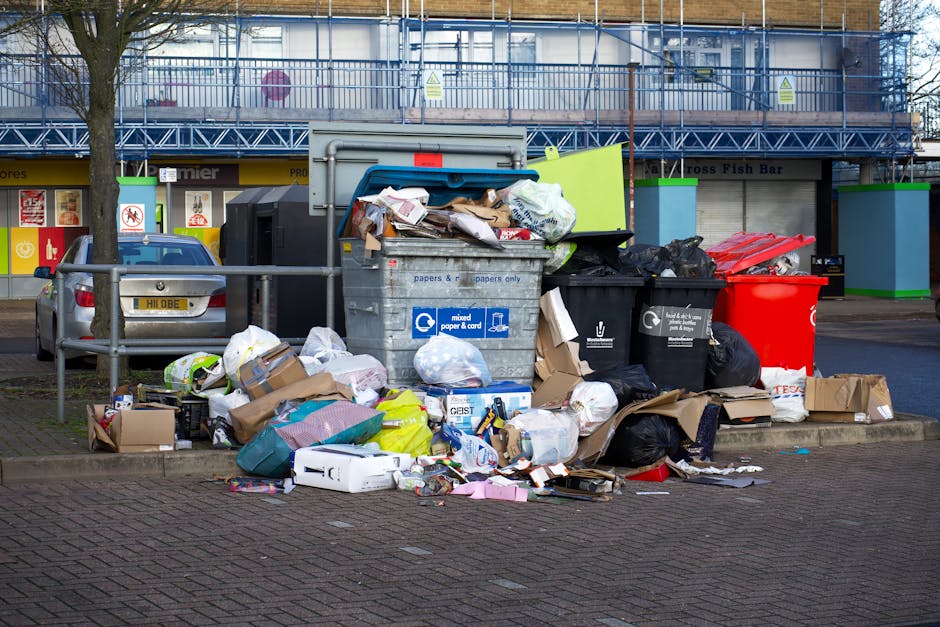
Rubbish clearance near Blackfriars Station Fleet Street: a practical local guide
If you need Rubbish clearance near Blackfriars Station Fleet Street, you are probably dealing with one of those jobs that feels simple at first and then turns into a headache. Bags pile up. Old furniture gets in the way. Office waste starts taking over a back room. Or maybe you are midway through a refurb and the place suddenly looks, well, a bit of a state.
The good news is that local rubbish clearance can be handled quickly, neatly, and with far less disruption than most people expect. This guide explains how it works, what to choose, what to avoid, and how to make the whole thing easier in a busy central London setting where access, timing, and loading space matter a lot.
Table of Contents
- Why Rubbish clearance near Blackfriars Station Fleet Street Matters
- How Rubbish clearance near Blackfriars Station Fleet Street Works
- Key Benefits and Practical Advantages
- Who This Is For and When It Makes Sense
- Step-by-Step Guidance
- Expert Tips for Better Results
- Common Mistakes to Avoid
- Tools, Resources and Recommendations
- Law, Compliance, Standards, or Best Practice
- Options, Methods, or Comparison Table
- Case Study or Real-World Example
- Practical Checklist
- Conclusion
- Frequently Asked Questions
Why Rubbish clearance near Blackfriars Station Fleet Street Matters
Blackfriars Station and Fleet Street sit in a part of London where space is at a premium and timing matters. That alone changes the way rubbish clearance needs to be done. A clearance that would be easy on a suburban street can become awkward here very quickly: limited kerb space, busy traffic, loading restrictions, pedestrians everywhere, and tight building access. You feel it straight away when trying to move bulky waste through a narrow entrance at 8:30 on a weekday.
Good rubbish clearance is not just about getting rid of stuff. It is about doing it in a way that avoids disruption, protects neighbouring businesses, and keeps your site presentable. If you are running a shop, office, managed property, or renovation project near Fleet Street, the difference between a tidy clearance and a chaotic one can be surprisingly noticeable.
There is also a trust element. People want waste taken away responsibly, not dumped in a rush or left sitting in the hallway because "the van will come back later". Let's face it, nobody wants bags of old carpet and broken furniture hanging around all afternoon. The right service gives you a cleaner space, less stress, and a much clearer plan for what happens next.
If you are sorting waste from a larger project, it may also make sense to look at related options such as construction waste disposal, builders waste removal, or office clearance, depending on the type of material involved.
How Rubbish clearance near Blackfriars Station Fleet Street Works
In simple terms, rubbish clearance means a team collects unwanted items or waste from your property and removes them for sorting, recycling, disposal, or transfer to the appropriate facility. In a central London location, the method usually depends on access, the amount of waste, and how quickly it needs to be cleared.
Most jobs follow one of a few common patterns. A small domestic clear-out may be handled by a man and van style collection. A larger office or refurbishment waste job may need a skip, a wait-and-load arrangement, or a grab lorry if access is awkward. The point is to match the method to the site, not the other way round. That sounds obvious, but in practice it is where many jobs go wrong.
For example, if waste is in a fifth-floor office with a narrow lift and a public entrance, the team may prefer a smaller vehicle and a quicker turnaround. If there is a basement strip-out with mixed bulky waste, then a more heavy-duty solution may be better. For a lot of local customers, the best fit is a mix of collection and clear guidance on what can be taken, what needs separate handling, and whether anything requires specialist disposal.
For a broader view of collection methods, it helps to compare rubbish removal with skip hire, wait and load skip hire, and grab hire services. Each one suits a different kind of site. A tidy domestic clearance on a quiet day is not the same as a same-day office emptying job, and it should not be treated like one.
Key Benefits and Practical Advantages
There are a few real advantages to using a proper rubbish clearance service near Blackfriars and Fleet Street rather than trying to move everything yourself.
- Less disruption: Waste is removed in one planned visit, which is especially useful near busy roads and shared entrances.
- Better time control: You can schedule around office hours, contractors, tenants, or trading times.
- Safer handling: Heavy items, awkward bags, broken furniture, and mixed waste are removed without you having to wrestle with them.
- Cleaner presentation: Ideal for lettings, office handovers, refurbishment projects, and pre-sale clearances.
- More suitable for central London access: The right team can work with restricted loading space, timed arrivals, and short collection windows.
- Sorting and recycling support: Waste can often be separated properly instead of being lumped together.
One underrated benefit is simple peace of mind. If you have ever stood in a hallway surrounded by old chairs, packaging, and random offcuts, you will know how quickly the job begins to feel bigger than it should. Getting it cleared properly can make the whole place breathe again. Small thing, big difference.
If recycling and responsible disposal matter to you, it is worth reading about the company's recycling and sustainability approach and waste recycling services. Those pages help you understand how mixed waste is typically handled and why sorting matters.
Who This Is For and When It Makes Sense
This kind of service is useful for a lot more people than you might think. In practice, it is for anyone who needs waste moved quickly, cleanly, and without turning their day upside down.
Typical users include:
- office managers clearing old desks, chairs, archive boxes, or redundant equipment
- landlords turning over a flat between tenancies
- homeowners clearing a property after redecorating or downsizing
- builders and tradespeople producing mixed renovation waste
- shopfitters, facilities teams, and property managers working to a deadline
- people dealing with bulky items that are awkward to carry, such as sofas, fridges, or mattresses
It also makes sense when access is limited. Around Fleet Street, that matters. The street layout, traffic, loading restrictions, and building entrances can all influence how waste is removed. Sometimes a full skip is not the most practical option. Sometimes a quick collection is simply easier. And sometimes, to be fair, the answer is a mix of methods rather than a single tidy solution.
For domestic jobs, domestic skip hire, house clearance, or garage and loft clearance can be the more suitable route if the waste volume is high enough. If you are removing a few bulky items only, a smaller clearance service may be all you need.
Step-by-Step Guidance
Here is a sensible way to approach rubbish clearance without overcomplicating it.
- Sort the waste by type. Separate general rubbish, recyclable materials, bulky furniture, electrical items, and anything you suspect may need special handling.
- Check access. Measure doorways, stairwells, lifts, and loading areas if the property is in a tight building or upper floor. A few minutes here can save a lot of trouble later.
- Decide on the method. For a small load, a van collection may be enough. For a larger or ongoing job, consider a skip, builders skip hire, or enclosed and lockable skip hire.
- Check whether permits are needed. If a skip has to go on the public highway, ask about skip hire permits or general skip permits.
- Confirm what can be taken. Some items need separate disposal. A quick check avoids surprises on the day.
- Book a time that suits the site. In central London, early windows are often easier. Fewer pedestrians, less competition for kerb space, and generally less faff.
- Keep the route clear. Move delicate items, unlock access points, and make sure the waste is grouped together.
- Ask about end processing. Waste should be taken to the appropriate route for recycling or disposal, not just tipped somewhere and forgotten about.
For a self-serve approach, it can help to check what can go in a skip before loading anything. That one step saves a lot of awkwardness. Nobody wants to pack a skip or van only to discover half of it needs to come back off again. Annoying, yes. Very avoidable, also yes.
Expert Tips for Better Results
Over the years, the jobs that go smoothly usually have the same things in common: clear instructions, realistic expectations, and decent preparation. Nothing glamorous. Just sensible planning.
- Photograph the waste before booking. It gives a clearer sense of size and type. A pile of bags can look much smaller in person than it does in a quick phone picture, or the other way round.
- Be honest about awkward items. If there is a broken appliance, a water-damaged mattress, or bulky office furniture, say so early.
- Use labelled zones. If you are sorting on-site, separate "take", "recycle", and "leave" piles. It keeps everyone moving.
- Choose the right disposal method for access. In a busy lane or tight courtyard, man and van or wait and load skip hire may be much easier than leaving a skip in place.
- Plan around business hours. If you are near Fleet Street during office opening times, a clearance slot earlier in the morning can be the difference between a quick job and a frustrating one.
- Ask about locked or enclosed options. For sensitive or high-value waste streams, enclosed and lockable skip hire is worth considering.
A slightly less polished but useful tip: have bin bags, tape, and a marker pen ready. It sounds minor, but those little things can save the day when the team arrives and everything needs a final tidy sort. Small detail, big impact.
Common Mistakes to Avoid
Most clearance problems come from a handful of predictable mistakes. They are easy to avoid if you know what to look for.
- Underestimating volume: What looks like a "few bags" often becomes two or three times that once it is gathered properly.
- Ignoring access issues: A van may be able to park nearby, but that does not mean large items can be carried easily from the building.
- Mixing restricted items into general waste: Some items require separate handling, especially anything classed as hazardous.
- Booking the wrong service: A full skip is not always the answer, and a small van collection is not always enough either.
- Leaving it too late: If you wait until the end of a project, you often end up paying for urgency rather than planning.
- Forgetting confidential waste: Paper files and business records should not just be chucked in with general rubbish.
If a job involves confidential paper or office records, look at confidential shredding. If it includes appliances, the more suitable route may be fridge and appliance removal. For old mattresses or sofas, there is a dedicated route too: mattress and sofa disposal.
Tools, Resources and Recommendations
You do not need a huge toolkit to arrange rubbish clearance, but a few practical resources make the job easier.
- Phone camera: useful for showing the amount and type of waste before you book.
- Tape measure: important if there are lifts, stairwells, or narrow access routes.
- Basic sorting bags or boxes: helpful for separating recyclables from general waste.
- Building access notes: keep codes, porter instructions, or loading notes ready.
- Payment and booking details: check the operator's payment and security guidance before confirming.
- Clear pricing information: review pricing and quotes and skip sizes and prices if you are comparing options.
For a broad service overview, you may also want to read about skip hire and same day skip hire. Those pages are handy if your clearance needs to happen quickly or if you are trying to balance cost against speed.
Law, Compliance, Standards, or Best Practice
Waste clearance in the UK is not just a practical task; it also comes with responsibilities. You do not need to memorise legislation to make a sensible decision, but you should expect any reputable provider to follow normal legal and environmental best practice.
At a high level, that means waste should be transferred to an authorised route, handled safely, and sorted appropriately where possible. If you are a business, you should also keep an eye on your own duty to manage waste responsibly and retain any records that matter to your organisation. That is especially important for offices, landlords, contractors, and managing agents.
Best practice usually includes:
- clear identification of waste type before collection
- safe handling of heavy, sharp, or awkward items
- separation of recyclable materials where practical
- special treatment for hazardous or restricted items
- secure handling of confidential materials
- appropriate use of permits if a skip is placed on public land
If your job involves anything unusual, such as contamination, damp materials, or potentially hazardous waste, ask early. It is much easier to sort it out before collection than after. And honestly, that conversation tends to be a lot shorter than people fear.
For site-related work, site clearance and health and safety policy information can help set expectations around safe working. If insurance and risk management are on your mind, the insurance and safety page is worth a look too.
Options, Methods, or Comparison Table
Choosing the right method is often the hardest part. Here is a simple comparison to make the decision easier.
| Method | Best for | Strengths | Watch-outs |
|---|---|---|---|
| Rubbish removal | Mixed household, office, or bulky items | Fast, flexible, minimal disruption | May not suit very large ongoing projects |
| Skip hire | Projects with steady waste over time | Good for larger volumes, easy on-site sorting | May need permits and space |
| Wait and load | Busy streets or restricted loading space | No long roadside storage, good for central London | Needs good timing and fast loading |
| Grab lorry hire | Heavier loads, loose material, site waste | Good reach and useful on awkward sites | Not ideal where access is extremely tight |
| Man and van | Smaller clearances and quick collections | Flexible and often simple to arrange | Can be less cost-effective for large loads |
There is no single "best" option for everyone. That is the honest answer. The right choice depends on access, timing, waste type, and how much space you have available on-site.
Case Study or Real-World Example
Picture a small professional office near Fleet Street finishing a refurbishment on a Friday afternoon. The team has old desks, a broken chair stack, packaging from new furniture, and a couple of filing cabinets that nobody wants to carry down two flights of stairs. The corridor is narrow. The building entrance opens onto a busy pavement. Not ideal.
In that kind of situation, the best approach is usually a pre-booked clearance with the waste grouped in advance. Confident sorting matters. General office waste goes one way, confidential paperwork goes for shredding, and bulky furniture is separated so it can be loaded quickly. If there are appliances or anything that needs special handling, those items are flagged before the crew arrives.
The result is usually a much shorter disruption window. The office gets back to normal, the refurbishment can continue, and nobody has to spend Monday morning apologising to staff for a hallway full of clutter. A tiny victory, maybe, but a real one.
For jobs like this, office clearance and commercial skip hire are often the most relevant services to compare. If the building is especially tight for access, wait and load skip hire can be a neat workaround.
Practical Checklist
Use this checklist before the clearance date. It keeps the job simple and reduces the chance of a messy surprise.
- Identify the main waste types.
- Separate anything confidential.
- Set aside hazardous or restricted items.
- Measure access points if the site is tight.
- Confirm parking or loading arrangements.
- Choose the right method: van, skip, wait and load, or grab lorry.
- Check whether permits are needed.
- Photograph the load if you want a clearer quote.
- Keep routes clear on the day.
- Confirm the collection time and contact details.
If you are dealing with a mixed project that includes demolition, strip-out, or heavy rubble, take a look at demolition waste removal and construction waste clearance. For heavier materials and site spoil, muck away services may be more suitable.
Get a free quote today and see how much you can save.
Conclusion
Rubbish clearance near Blackfriars Station Fleet Street is really about making a busy, high-pressure part of London easier to manage. The best results come from matching the service to the space, the waste type, and the timing of the job. That is the part people often skip, and then everything becomes harder than it should be.
Whether you are clearing a flat, an office, a shop, or a worksite, the right approach should feel controlled, tidy, and genuinely helpful. Not dramatic. Not messy. Just properly handled. And when it is done well, you notice the difference straight away. The room feels lighter. The route is clear. You can move on.
Sometimes that is all you need: a clean slate and a bit of breathing room.
Frequently Asked Questions
What does rubbish clearance near Blackfriars Station Fleet Street usually include?
It usually includes the collection and removal of general rubbish, bulky items, mixed household waste, office clear-out materials, and some construction-related waste, depending on the service booked.
Is rubbish clearance better than skip hire in central London?
It depends on the site. Rubbish clearance is often better for tight access, busy streets, or one-off bulky loads. Skip hire can be better for longer projects with steady waste output.
Can I get same-day rubbish clearance near Fleet Street?
Sometimes, yes. Availability depends on the time of day, waste type, and the schedule already in place. If the job is urgent, it is worth checking same day skip hire or quick collection options early.
Do I need a permit for rubbish clearance?
Not usually for a direct collection, but you may need a permit if a skip is placed on the public highway. That is where skip hire permits or skip permits become relevant.
What items are commonly not allowed in mixed rubbish loads?
Items that need special handling, such as hazardous waste, some electrical items, and certain confidential materials, may need to be separated. Always check before loading.
How do I know which service is right for my job?
Start with the waste type, then look at volume and access. If you have furniture or office waste, man and van or rubbish removal may suit you. For larger project waste, a skip or grab lorry may be better.
Is rubbish clearance suitable for office clear-outs?
Yes, very much so. It is often the most convenient way to remove desks, chairs, packaging, and other business waste without disrupting the whole building.
What happens to the waste after collection?
It is normally taken for sorting, recycling, or disposal through the appropriate route. Good operators will separate recyclable materials and handle specialist items properly.
Can bulky items like sofas or fridges be removed?
Yes, but they may need specific handling. Dedicated pages such as mattress and sofa disposal and fridge and appliance removal are useful if those items are part of your load.
How much space do I need for rubbish clearance?
Less than you might think for a direct collection, though access still matters. For larger jobs, make sure the loading route is clear and that the collection vehicle can stop legally and safely nearby.
Is confidential waste handled differently?
Yes. Paper files, records, and sensitive documents should be handled through a secure process such as confidential shredding rather than mixed in with general rubbish.
What should I ask before booking a clearance service?
Ask about the waste types accepted, access needs, whether permits are required, how quickly the job can be done, and what happens to recyclable or restricted items. That five-minute conversation can save a lot of trouble later.